
This interview is with Karen Canham, Entrepreneur/Board Certified Health and Wellness Coach at Karen Ann Wellness.
Karen Canham, Entrepreneur/Board Certified Health and Wellness Coach, Karen Ann Wellness
As a Board Certified Health and Wellness Coach specializing in trauma and neuroscience, can you tell us about your background and what led you to focus on nervous system regulation?
I was anorexic as a teenager, trying to cope with my environment. I went to residential outpatient treatment as an adult and found yoga to be the modality to get me back into my body, present and aware. I then went on to teach yoga along with climbing the corporate ladder. I achieved a great title, benefits, and salary with a Fortune 50 company, but it was never enough, and even though I had recovered from anorexia, I was still struggling to feel stability. I would push myself to the limits and then completely collapse. Once I found nervous system regulation, which includes somatic experiencing and parts work therapy, I finally understood myself and others to the level of being able to map mine and others’ systems to respond from a place of my present moment and not a past version of myself. I found it to be life-changing and so freeing. The work reduces the emotional load we carry, freeing up space to have the capacity to live in true alignment with yourself and live in flow.
What was the pivotal moment in your career that made you realize the importance of nervous system regulation in overall health and wellness?
I was working 70-hour weeks and had COVID in November twice and then again in December. I didn’t take time to recover. By the third time, I knew I couldn’t continue the way I was. I had a boss who micromanaged and never showed up at the office. Many of my parts were showing up – people-pleasing and overachieving to name two. I didn’t understand at the time how I had gotten to this space, but I knew I was done. I quit my job and worked with private clients in wellness. Then I found nervous system work, and it became the main focus of my practice.
You’ve mentioned that nervous system regulation is often overlooked in wellness practices. Can you explain why it’s so crucial for our health and how it affects our body’s natural defenses?
If you are operating in fight-or-flight, you are not able to make decisions or communicate from your true self. Our system is being overridden, and this takes an effect on other systems of the body, including immune and cardiovascular. 80% of the communication comes from the body to the brain. This is why tools that focus on trying to control the brain fall short. If we keep overriding the body, all systems start to go haywire.
In your experience, what are some common signs that someone’s nervous system might be dysregulated, and how does this typically manifest in their daily life?
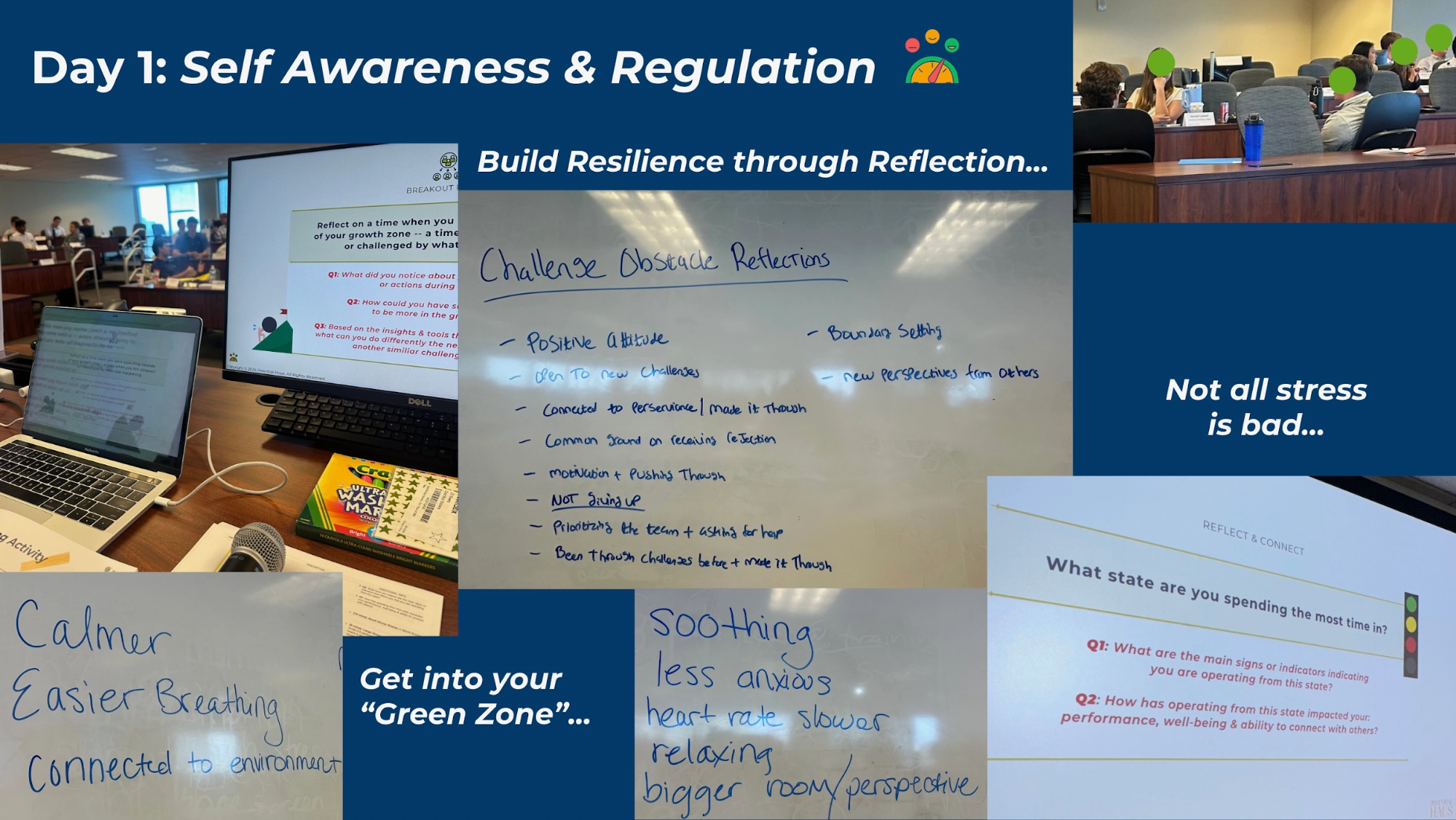
It’s important to point out that it is normal to get dysregulated. There is also a difference between being activated and being dysregulated. Being dysregulated would be being in a chronic place of dorsal (shut down) or sympathetic energy (pushing, going, doing). This is where we start to see the other systems of the body break down. Activation is being in a dorsal or sympathetic state for a short time and being able to bring yourself back into ventral vagal. Ventral vagal is the green zone, the state of being where we are our true authentic adult selves, where we can make decisions with clarity and communicate with compassion and connection.
You’ve developed various wellness-focused offerings for corporations. Can you share a specific instance where you’ve seen these practices make a tangible difference in a workplace environment?
Most corporations I work with say they see a reduction in the amount of conflict and the amount of conflict where high-level leaders need to get involved. All corporations have different goals that we measure, although communication seems to be universal. Companies that I have worked with see an increase in retention rates, a decrease in call-offs, and an increase in ROI due to less energy focused on problems. One specific case study from a Sales Organization showed results of a 54% increase in retention, 63% decrease in stress, 154% increase in revenue, 53% increase in resilience, and 43% increase in team trust. We measure these through surveys, taking one before we begin the work and one after.
With rising rates of depression and loneliness, especially among young adults, how can nervous system regulation techniques be particularly beneficial? Can you provide an example from your coaching practice?
So we can think of depression as being in a dorsal state (shut down). Loneliness usually is related to a dorsal state, although it can be a sympathetic state as well. We are not connected to ourselves when we are in either of these states and therefore cannot feel connected to others.
One of the key components of nervous system work is finding safety in the body to feel. Everyone is different, and it is important to build a container of safety and trust as the coach. There are specific neurotools I use to help bring people into a ventral vagal state. These tools stimulate the vagus nerve immediately and help to bring the system into regulation. Once we are in a regulated place, then we are able to feel into the body and start somatic experiencing. From there, we can start to explore what parts of us are present in the body.
An example from my coaching practice would be: A client comes in escalated (sympathetic energy). I know this because I check in with them at the start of the session. In this case, I would use a neurotool to bring the client back into center. I use a scale before the tool and after to understand where they are at. I then assess if the client is ready to feel into the body (I do this through mapping the system, attunement, etc.). If they are in a place to safely feel into the body, we start the somatic experiencing. There usually is a topic we are using that was established in the check-in.
As I guide the client through the experience, I am mindful of their system and pull back or move forward based on what their system can handle. I then may start to guide them into a part (example: controller) that is showing up. I ask questions that help them discover what is there. I then will guide them back to their safety anchor and out of the experience. Then I allow them to discuss what came up for them. After this, I may send them some education on neuroscience and/or prompts to reflect on. I also give them unlimited text support throughout their container of working with me so they can immediately get guidance. This helps speed up the process of the work.
You’ve emphasized the importance of not glorifying overwork. How do you help clients integrate nervous system regulation practices into their busy lives without it feeling like another item on their to-do list?
Nervous system regulation is not another thing to do; it’s a way of being. You can practice this way of being anywhere. For example, feeling your right foot and then left foot on the floor (bilateral stimulation) can be done while we are at the grocery store. We can practice regulation with our kids when they are having a meltdown. We just notice what is happening in our system, and we respond from regulation and not sympathetic energy like the child. This also helps the child to co-regulate with you and come into regulation.
In your work, you often start sessions with a grounding exercise. Could you walk us through a simple technique that our readers could try right now to help regulate their nervous system?
Feel your feet on the floor. Lift up each toe and set it back down. Feel the support of the chair you are sitting in; allow it to hold you. Take a deep breath in through the nose and a deep sigh out the mouth. Roll the shoulders up to the ears and back a few times. Turn your head over your right shoulder just enough to feel a stretch and hold for 10 seconds. Slowly come back to center and do it on the other side. You can close your eyes, and if you want to stimulate the vagus nerve even more, you can keep your eyes open on the neck stretches. If you want more sensation, you can gaze up toward the ceiling.
Looking ahead, what do you see as the biggest challenge in the field of health and wellness, and how do you think nervous system regulation practices could help address it?
Health and wellness has also been a push-do-more mentality with a focus on our outward appearance. Nervous system work will slowly but eventually shift these myths, and we will start caring about how we feel and being able to be so attuned to our bodies we know exactly what to give them.