
25 Surprising Communities That Changed How People Pursue Their Passions
Communities have quietly reshaped how people approach their passions, often in ways that challenge conventional wisdom about growth, collaboration, and success. This article examines 25 unexpected groups—from hand lettering enthusiasts to logistics professionals—that have fundamentally altered their fields through shared learning and collective action. Drawing on insights from experts and community leaders, these stories reveal how passion-driven groups create lasting change when they prioritize connection over competition.
- Audio Learners Reclaimed Time From Chaotic Lives
- Logistics Experts Treat Efficiency as Strategic Craftsmanship
- OPUS Transformed Solo Work Into Collective Momentum
- Hand Lettering Community Built Confidence and Identity
- Keyboard Enthusiasts Transformed Tools Into Creative Instruments
- Independent Rescuers Cared Beyond Just Earning Money
- Collaborative Experts Shifted Reputation Management to Proactive
- Failure Stories Became the Strongest Leadership Tool
- Patients Built Support Systems Reflecting Calm Medicine
- Shared Stories Made Exhausting Work Feel Steadier
- Niche Creators Taught Passion Without Ego Works
- DIY Homeowners Shifted Service From Reactive to Educational
- Retro Web Designers Proved Limitations Breed Clarity
- Failed Franchisors Taught Selective Growth Over Speed
- Psychology Nerds Shifted Focus From Goals to Users
- Discord Communities Spread Ethics Faster Than Manuals
- Franchise Owners Challenged Assumptions Outside Startup Circles
- Former Conservationists Merged Tech With Environmental Advocacy
- DiSC Trainers Share Openly Instead of Compete
- Restaurateurs Collaborate to Elevate the Entire Industry
- Informal Teacher Clubs Inspired Peer-to-Peer Language Programs
- Innovation Became Art Through Creative Founders
- Urban Gardeners Inspired Sustainable Landscaping Creativity Integration
- Small Business Owners Made Creativity Feel Collaborative
- High Achievers Struggle but Value Self-Awareness Together
Audio Learners Reclaimed Time From Chaotic Lives
The most surprising community I stumbled into came from a pretty nerdy obsession: making dense academic reading feel usable in real life. When we started turning papers and textbooks into audio, I assumed the “community” would just be students who hate reading (still true). But the people who grabbed me were the in-between listeners — folks living in the cracks of the day.
I started hearing from ER nurses who listen to journal articles on night shifts, warehouse workers doing certification prep with earbuds under earmuffs, new immigrants practicing English by listening to their own class notes at 0.8x speed, even a few long-haul truckers who were basically doing a slow-motion master’s degree one highway mile at a time. None of them called themselves “learners” first. They were just trying to reclaim time that life had stolen.
Finding them changed my relationship with the interest in a weird way: it stopped being about productivity or “learning styles.” It became about dignity. Audio wasn’t a hack — it was a way to say, “Your brain still gets to grow even if your schedule is chaos.” And honestly, it made me a lot more protective of the messy, human side of learning.
Now when I think about my passion, I picture less of a classroom and more of a thousand tiny, private universities happening in cars, kitchens, and break rooms. That’s the community I didn’t expect, and it’s the one that keeps me hooked.

Logistics Experts Treat Efficiency as Strategic Craftsmanship
The most surprising community I discovered through pursuing my passion—running Co-Wear—was the highly specialized and fiercely collaborative e-commerce logistics and fulfillment community. When I started out, I thought logistics was a dull, transactional cost center. I assumed everyone in that space was guarding their secrets, but I found the exact opposite: a small, global network of business owners and operations heads who are obsessively passionate about maximizing efficiency and process integrity.
The surprise was finding people who treat inventory management and supply chain transparency with the same sense of craftsmanship that I apply to product design. We connected over solving complex, shared problems—like dealing with customs delays or finding the perfect sustainable packaging solution. We weren’t competitors in the traditional sense; we were all just trying to run the cleanest, most trustworthy operations possible.
Finding these like-minded people fundamentally changed my relationship with running Co-Wear. It shifted logistics from a necessary evil into a strategic obsession. Instead of feeling isolated and stressed every time a shipment went wrong, I gained a global sounding board of experts. It reinforced the idea that competence is best built collaboratively, and that even the most technical parts of your business are still driven by people who genuinely care about doing the work perfectly.
OPUS Transformed Solo Work Into Collective Momentum
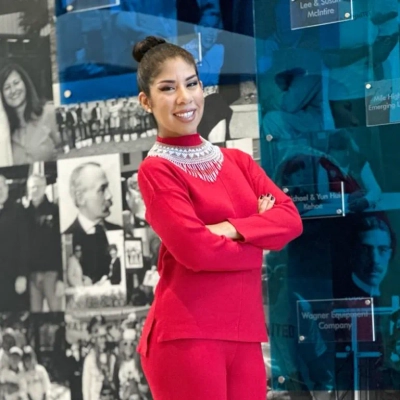
Honestly, the most surprising community I stumbled into was OPUS, and I didn’t see it coming. You walk in expecting another “founder forum,” and instead you find a room full of people who think like you, move like you, and obsess over building the way you do. For me, it shifted my whole relationship with my passion. Before OPUS, entrepreneurship felt like a solo sport. You push, grind, and figure things out in your own corner. But being surrounded by like-minded builders, people who actually get the highs, lows, and the weird in-between moments, turns the journey into something lighter, more energizing. It’s not just support. It’s momentum. You start sharing experiments, swapping strategies, pressure-testing ideas, and suddenly your passion stops being “your little thing” and becomes something that grows because it’s being fed by a collective brain. Finding OPUS reminded me that founders don’t thrive in isolation. We thrive in tribes, and once you find yours, the work stops feeling heavy. It starts feeling alive.

Hand Lettering Community Built Confidence and Identity
The most surprising community I stumbled into was a small online group of people who were obsessed with the same niche creative hobby I’d always kept to myself—hand lettering. I’d treated it as something I did late at night to unwind, almost like a guilty pleasure. I never imagined there were others who geeked out over brush tips, paper textures, or the rhythm of drawing a perfect curve. Finding that group felt like opening a door I didn’t know existed. Suddenly, this quiet, solitary pastime had a pulse. People were sharing techniques, celebrating tiny wins, and laughing about mistakes I thought only I made.
What changed most for me was my confidence. Before the community, I saw my passion as “just a hobby,” something I wasn’t good enough to talk about. But being surrounded by people at all levels—from beginners to pros—made the craft feel more human and accessible. Their encouragement pushed me to practice more, try new styles, and even share my work publicly for the first time. Instead of treating hand lettering as something private, I started to feel proud of it. The community turned my interest from an escape into a source of connection and growth.
The biggest shift was realizing I wasn’t alone. Passion can feel isolating when you’re the only one who cares, but finding people who share that spark makes the whole experience richer. It stopped being a hobby I hid and became a part of my identity I was excited to embrace.

Keyboard Enthusiasts Transformed Tools Into Creative Instruments
The most surprising community I stumbled into was the Custom Mechanical Keyboard Enthusiast scene. I initially looked into it just to replace a broken office keyboard, assuming it would be a quick Amazon purchase, but instead, I fell down a rabbit hole of people who treat “input devices” with the same reverence that a violinist treats a Stradivarius. I was shocked to find a global subculture debating the merits of “lubing switches” with Krytox oil, soldering their own circuit boards, and waiting nine months for limited-run keycap sets designed by graphic artists.
Finding this community completely shifted my relationship with the “invisible interface” of my work, teaching me that tactile feedback is a design layer in itself. Before this, I treated my tools as passive, disposable plastic, prioritizing my monitor while ignoring the keyboard I touch for eight hours a day. This community showed me that the sound and feel of my tools directly impact my creative flow, transforming me from a consumer of generic gear into a maker who solders my own switches to gain a sense of ownership over my digital craft. This new hypersensitivity to physical user experience transferred directly to my UI design work, where I became obsessed with the “feel” of a button click or a transition speed, realizing that friction kills flow in software just as much as it does in hardware.
Ultimately, this obsession transformed my desk from a mere workstation into a cockpit where every switch and key is tuned to my specific creative rhythm. It acted as a reminder that as designers, we should never overlook the tools that facilitate our creation, because a better instrument often leads to a more enjoyable performance.
Independent Rescuers Cared Beyond Just Earning Money
The most surprising community I found was actually the network of independent roadside rescuers when we launched Road Rescue Network. I expected to attract experienced tow truck operators and mechanics, but instead we got retired folks looking for flexible income, college students between classes, and even former rideshare drivers wanting to diversify. People who had never changed a tire professionally were signing up, going through our training portal, and becoming reliable rescuers within days.
What shocked me most was how much these rescuers cared about the mission beyond just earning money. They’d send us photos of the people they helped, share stories about getting a mom with kids back on the road safely, or helping someone make it to a job interview. That human element completely changed how I built the platform–I realized we weren’t just dispatching services, we were connecting people who genuinely wanted to help with people who desperately needed it.
This community taught me that gig economy workers aren’t just looking for the highest per-job payout. They want respect, good tools, real support, and to feel like they’re part of something meaningful. We added 24/7 technical support, better training resources, and transparent pricing because the rescuers told us what mattered. Now we’re seeing 12-18 minute average job times and $42-64 per job, with rescuers actually proud to wear the Road Rescue brand.
It fundamentally shifted how I approach all my platforms now. I stopped thinking about “users” and started building for actual communities with real needs and pride in their work.
Collaborative Experts Shifted Reputation Management to Proactive
Honestly? The online reputation management community. When I started Reputation911 back in the day, I thought I’d be working alone in this niche investigative corner of the internet. Instead, I found this whole network of SEO specialists, crisis PR people, legal experts, and even ethical hackers—all trying to help people take control of their digital presence.
What surprised me most was how collaborative everyone was, despite technically being competitors. We’d share tactics in private forums about handling specific platforms, compare notes on what worked for pushing down negative content, and warn each other about new reputation threats we were seeing. That completely changed how I approached the work—I stopped thinking of brand building as just a technical SEO problem and started seeing it as this human story that needed multiple perspectives.
That shift is actually why I launched Brand911. I realized the real value wasn’t just in fixing problems after they happened—it was in building something strong from the start. The investigative mindset I brought from my PI days combined with what I learned from that community helped me see that proactive brand building beats defensive reputation repair every time.

Failure Stories Became the Strongest Leadership Tool
The entrepreneurial community, hands down. When I hit rock bottom with my first business failure, I expected to be shunned or judged. Instead, I found this incredibly supportive network of people who’d been through similar crashes and were genuinely invested in helping me rebuild.
What shocked me was the vulnerability. In a podcast interview, I shared the raw details of losing everything–the mistakes, the mindset issues, the painful collapse. I expected maybe a few people to relate. Instead, I had franchise owners, accountants, and entrepreneurs from completely different industries reaching out with their own failure stories and what they learned from them. Suddenly I wasn’t alone in this.
That shifted everything about how I built BooXkeeping. I stopped hiding behind the “success only” narrative and started leading with accountability and real talk. Our franchise owners now have this culture where they openly discuss struggles, not just wins–whether it’s client challenges or work-life balance issues. That honesty has created stronger bonds between franchisees than any corporate manual ever could.
The biggest lesson? Failure is the membership fee to the most valuable business community you’ll ever join. Those conversations turned my biggest shame into my strongest leadership tool.
Patients Built Support Systems Reflecting Calm Medicine
The most surprising community I found through this work grew out of something quiet rather than intentional. At Health Rising DPC, you expect to meet patients, families, and other clinicians, but you do not expect the small, loosely connected circle of people who show up because they care about the slow, human side of medicine. It started with a few patients who shared their experiences online, not to praise the clinic but to talk honestly about what it felt like to finally have space to breathe during an appointment. Their posts reached people dealing with chronic illness, new parents trying to stay afloat, caretakers who had spent years feeling invisible, and even retired nurses who missed the days when medicine felt personal. That group slowly grew into a community built on shared relief. They swapped recipes that made eating with diabetes feel manageable, compared notes on stress routines, and encouraged each other through setbacks. What surprised me most was how naturally they formed their own support system without being asked. It reminded me that sometimes your passion pulls in people who needed the same breath of calm you were trying to build. The community becomes a reflection of the work, steady and generous in ways you did not plan but deeply value.

Shared Stories Made Exhausting Work Feel Steadier
I stumbled into a small online group of people who trade stories about working with kids in tough seasons. Not polished success stories. The messy, funny, bittersweet ones you only understand if you’ve been there. I joined out of curiosity and stayed because it felt like walking into a room where everyone already speaks your language. They got the late-night worries, the small victories that nobody outside the work even notices, and the exhaustion that hits in waves.
Finding that community changed my relationship with the work. I stopped trying to carry everything alone. I started sharing little moments I would’ve ignored before, and those tiny exchanges pushed me to pay closer attention to the good stuff. A kid choosing kindness. A quiet breakthrough. A day that went smoother than expected. The passion didn’t get louder. It got steadier. That’s the real surprise. Sometimes the thing that keeps you going isn’t the work itself, but the people who understand why you care so much in the first place.

Niche Creators Taught Passion Without Ego Works
When I think about the most surprising community I discovered while pursuing my passion, my mind goes back to the early years of building digital products and content systems. At the time, I assumed my circle would mostly be marketers, founders, and engineers. Instead, the community that ended up shaping me the most was a group of small, often overlooked niche creators and operators who were trying to build something meaningful with very limited resources.
I first stumbled into that world after working with a client who ran a hyper-specific educational blog. She didn’t have a big team, didn’t speak the language of funnels or automation, but she cared deeply about her audience. Through her, I met dozens of creators with the same mindset. They came from different industries, but they all shared a fascination with using their experiences to help others. They were resourceful in ways I hadn’t seen in the startup world. They questioned everything, pushed for clarity, and taught me that passion without ego is a powerful formula.
Being around them shifted my relationship with my own interests. I began to see digital strategy less as a technical discipline and more as a craft. Their enthusiasm reminded me of why I started in the first place: because I loved solving problems, not just scaling systems. It made me more intentional with the projects I took on and more curious about the people behind them. And it pushed me to think less about frameworks and more about impact.
To this day, that community influences how I work and how I think about growth. They grounded me, gave me perspective, and reminded me that passion is sustainable only when shared with people who care about the same things for the same reasons.

DIY Homeowners Shifted Service From Reactive to Educational
The most surprising community I discovered through HVAC wasn’t other business owners or technicians; it was the online network of HVAC DIYers and home efficiency experts. When I first got into the trade, I thought our job was just fixing broken things. I was shocked to find huge groups of homeowners in San Antonio and across the country who are genuinely passionate about maximizing their system’s SEER rating, understanding duct leakage, and tracking their energy use hour by hour.
Finding these like-minded people totally changed my relationship with the business. It shifted my focus from simply reacting to breakdowns to proactively educating and consulting. We realized we weren’t just in the repair business; we were in the comfort and efficiency business. We started tailoring our content and our service recommendations to speak directly to those homeowners who want to geek out over the technical details and save money in the long run.
This engagement has made Honeycomb Air a stronger company. When you connect with customers who are as interested in the why as you are, you move past transactional service and build real loyalty. It forces me to stay sharp, train my team on the latest efficiency trends, and ensures that the passion for the technical details is always connected to the ultimate goal: helping our customers live in a perfectly comfortable and efficient home.
Retro Web Designers Proved Limitations Breed Clarity
I found an underground community of designers who rebuild retro websites from the Wayback Machine just for fun. Someone posted a pixel-perfect recreation of the 1997 Space Jam site, and I went down a rabbit hole. These people weren’t nostalgic; they were studying how sites worked under brutal constraints like 56k modems and 800×600 screens. It completely changed how I design now.
Modern web design obsesses over endless scrolling and parallax effects, but these old sites had to communicate everything above the fold with maybe three images total. I started applying those constraints to client projects voluntarily, asking what we could cut instead of what we could add.
My load times dropped, conversions went up, and clients stopped requesting features just because competitors had them. This community taught me that limitations breed clarity, and most modern websites are solving problems users don’t actually have.
Failed Franchisors Taught Selective Growth Over Speed
The most surprising community I found was actually other franchisors who had failed. Early in my career, I expected successful franchisors to be my best teachers, but the people who’d expanded too fast or chosen the wrong franchisees taught me infinitely more. They were brutally honest about their mistakes in ways successful brands never are publicly.
I remember one franchisor who’d awarded 47 franchise agreements in his first year–sounds amazing until you learn that 31 of them closed within 18 months. He walked me through every bad decision: skipping proper vetting because he needed the fees, not training his team to spot red flags, celebrating quantity over quality. That single conversation shaped my entire “selective growth” philosophy at Strategic Franchise Development.
This community of “franchise alumni” changed how I approach every client relationship. Now when a brand wants to award 10 units immediately, I actually slow them down and share those cautionary tales. We track our clients’ franchisee success rates obsessively because I learned from people who didn’t–and paid the price. The failures taught me that your first franchisee sets the tone for your entire system, so getting it right matters more than getting it fast.
These conversations happen quietly at industry events, usually over drinks when the presentations are done. Nobody brags about their mistakes on stage, but in private, franchisors who’ve been through the wringer will tell you everything if you just ask and listen.

Psychology Nerds Shifted Focus From Goals to Users
The most surprising community I found was actually conversion rate optimization practitioners and behavioral psychology nerds. When I started managing e-commerce at BBQGuys.com over a decade ago, I thought I was just learning marketing tactics–but I stumbled into this entire ecosystem of people obsessed with understanding why humans click one button versus another.
What changed everything was realizing these weren’t just marketers or designers–they were psychologists, data scientists, user researchers, and even former therapists all converging on the same problem from different angles. When we acquired Rougarou Studios and I joined SiteTuners in 2018, suddenly I was collaborating with economists like Nicolas who build forecast models and UX designers like Paola who obsess over accessibility patterns I’d never considered.
The biggest shift in my thinking came from working on membership sites like the Renewd.net case. I used to think conversion optimization was about clever copy and button colors, but this community taught me it’s actually about advocating for the end user’s mental state. Now when I mentor our optimization teams, I’m constantly asking “what question is running through the visitor’s head right now?” instead of “what do WE want them to do?”
That fundamental perspective flip–from business goals to user psychology–only happened because I found people who cared as much about the *why* behind behavior as the *what* in the data. It’s made me a much better advocate for both my clients and their customers.
Discord Communities Spread Ethics Faster Than Manuals
The Discord servers and online OSINT communities, hands down. When I started training investigators, I expected formal professional associations and law enforcement groups. What I actually found were these raw, passionate Discord channels where a 19-year-old college student would be troubleshooting geolocation techniques alongside a retired FBI analyst at 2 a.m.
What hit me hardest was watching how fast knowledge moved in these spaces compared to traditional training environments. Someone would find a new metadata extraction method on Tuesday, and by Friday it would be refined through collective testing by hundreds of practitioners across six continents. That completely rewired how we built our certification programs at McAfee Institute–we stopped just teaching static techniques and started creating living curricula that evolved with the community.
The most unexpected part? These communities taught me that the ethical mindset spreads faster peer-to-peer than top-down. I’ve seen investigators call out bad practices in real-time and shut down anyone trying to cross legal lines. That informal accountability system is stronger than any compliance manual I could write.
It fundamentally changed how I view professional development. The certification gives you the framework and credibility, but these communities give you the pulse of what’s actually working in the field right now. Over 4,000 organizations trust our programs specifically because we stay plugged into these grassroots networks where the real innovation happens.
Franchise Owners Challenged Assumptions Outside Startup Circles
Honestly, one of the most surprising communities I discovered wasn’t in tech or startups; it was among multi-unit franchise owners. Coming from a tech-forward background, I thought I’d rely heavily on startup circles and accelerators. But the people who ended up teaching me the most were the franchise owners themselves: folks who’ve built businesses, launched new units, sold, and started again.
Talking with them changed how I approach Franzy. It wasn’t just about validating pain points; they helped me understand the real human side of franchising: what keeps owners up at night, what decisions matter most, and how technology can make their lives easier. That community gave me perspective that influenced both the product and our mission.
If you’re stepping into a new space, my advice is to stop sticking to the “expected” community. The people you meet outside your comfort zone could challenge your assumptions as much as they’ll open doors you didn’t even know existed.

Former Conservationists Merged Tech With Environmental Advocacy
I never expected to meet so many former conservationists who became tech founders. People who, like me, used to spend weekends on wildlife projects but now write code and build AI tools. Finding that shared background made me realize my interests in AI and environmental advocacy weren’t separate at all. It actually gave my work a clearer narrative. It’s been about a year in this network, and the conversations have reshaped how I think about purpose and growth at Backlinker AI. If you’re pulled between different passions, talk to people outside your world. That’s where the good ideas start.

DiSC Trainers Share Openly Instead of Compete
I was surprised by the community of trainers and consultants that I interacted with who utilize the Everything DiSC behavioral assessment tool like me. I anticipated a competitive environment, but I experienced individuals who were receptive to sharing their experiences, stories, ideas, and what they have learned about communicating through using these tools. The community’s willingness to openly share their experiences helped me recognize that growing as an individual in this field of interest will be largely dependent upon each individual’s ability to learn from others rather than solely depending upon themselves to grow and develop.
This community discovery has helped shape my view of my passion for understanding human behavior and has shown me that there are many people who are also interested in understanding human behavior and that it is a shared journey compared to a personal goal. The openness of this community has helped me remain curious and humble and has reinforced the idea that the greatest accomplishments occur when people connect, share ideas, and provide assistance to one another in order to better communicate and teach.
Restaurateurs Collaborate to Elevate the Entire Industry
An unexpected community I encountered in my journeys about hospitality hiring was a group of small independent restaurateurs that share data, tools, and hiring strategies throughout their careers almost as an open-source community. Initially, I anticipated an enormous amount of competition; however, there was a “circle” of collaboration of owners who wanted to see the industry become elevated as a whole. They were eager to share strategies on candidate experience, onboarding, and retention, even encouraging anyone willing to elevate or to engage in improving the pipeline of talent.
When I found this community of similar-spirited people, it changed the lens through which I viewed my work. My thinking shifted from solving hiring issues one employer at a time to a community solution-focused lens. Their willingness to collaborate and engage pushed me to try things quicker, to learn quicker, and even to think of hiring not just as an operational challenge but as a shared craft.
This community was also a reminder of why my heart is in this profession. Being able to witness different approaches to how various owners, managers, and talent specialists support one another made my job more fulfilling and even sustainable.
Informal Teacher Clubs Inspired Peer-to-Peer Language Programs
I used to think formal language classes were the only way forward, until I met the teachers building their own clubs across Asia. These groups had no textbooks; they just shared food and taught each other. The energy between them made me rethink my work at several associations. We started weaving more peer-to-peer ideas into our official courses. If you’re building language programs, find these informal groups. They have ideas you’d never come up with in a planning meeting.
Innovation Became Art Through Creative Founders
“When I found people who treated innovation like art, my passion stopped being a task and became a creative force.”
The most surprising community I discovered while pursuing my passion was a small, global network of founders who shared the same obsession for building high-impact products, but approached it through creativity rather than just metrics. Connecting with them changed everything—it shifted my relationship with my own work from a responsibility to a craft. These were people who talked about innovation the way artists talk about colors, and that perspective pushed me to think bigger, experiment more, and trust my instincts even when data wasn’t enough. Being around them reminded me that leadership isn’t only about driving outcomes; it’s also about staying connected to the curiosity that got you started in the first place. That community didn’t just support my passion—they helped me evolve it.

Urban Gardeners Inspired Sustainable Landscaping Creativity Integration
The most interesting community I met when pursuing my interests in landscaping and turf management was a group of urban gardeners and sustainable landscape enthusiasts. I thought I would primarily meet people associated with traditional turf jobs relating to lawns and commercial projects. Instead, it was a group of enthusiastic gardeners experimenting with drought-tolerant plants, soil health concepts, materials, and methods of landscaping that are environmentally responsible. The creativity and willingness of the individuals in this community to share ideas caused me to rethink what turf solutions might be and opened my mind to a great number of opportunities in the industry.
This discovery of similar interests radically altered my relationship with my work. My emphasis remained not just on the practical commercial efficiency of the projects, but rather on the integration of sustainability and creativity into each project I work on. The interaction with this community inspired me to try new things, use more environmentally responsible practices, and finally look at the professional occupations I am involved with, not just as the means of making an income, but as a way of collaborating with a creative public toward the means of effecting a more responsible environment.

Small Business Owners Made Creativity Feel Collaborative
The most surprising community I discovered through pursuing my passion was a group of small business owners who were just as obsessed with branding and design as I was. I expected to connect with other designers, but instead I found entrepreneurs who cared deeply about creativity, storytelling, and visual identity. Being around people who understood both the creative side and the business side made my passion feel more meaningful. It turned my interest into something collaborative rather than something I pursued alone, and it pushed me to grow, share more, and take my work more seriously.
High Achievers Struggle but Value Self-Awareness Together
The most surprising community I discovered through pursuing my passion was how many high achievers really do appear totally fine on the outside but are struggling with burnout, imposter syndrome, and stagnation on the inside. There is also a community that values self-awareness and growth. This helped shift me from a place of “doing” my passion to a place of “living” my passion.