

Delegation Tactics That Keep Client Delivery Fast and High-Quality
Delegation can make or break client delivery timelines and quality standards. This article brings together proven tactics from industry experts who have refined their handoff processes across project types and team structures. Each method addresses a specific risk point where work changes hands, ensuring accountability remains clear and outcomes stay consistent.
- Assign Outcomes, Assess Monthly
- Shift Review Toward Shortlists
- Map Structure at Wireframe
- Prioritize Early, Test at Twenty Percent
- Check Direction at Thirty Percent
- Delegate Decisions Through Three-Line Briefs
- Guard Brand Moments With Senior Inspection
- Request One-Page Project Briefs
- Own Compliance, Use Daily Checks
- Discuss Safety Each Morning
- Approve Listings Prelaunch
- Define Failure Modes for Handoffs
- Triage Creative Tasks Each Monday
- Route Feedback Via Supervisors
- Lock Logic Before Fabrication
- Confirm Triggers Via Verbal Teach-Back
- Verify Security Prior to Transfer
- Audit Diagnostics Ahead of Booking
- Build Go/No-Go Gates During Downtime
- Apply Four Lenses to Risks
- Stage Digital Phase Checks
- Require Homeowner Walkthroughs at Closeout
- Flag Voice Risks After First Draft
- Gate Transfers With Complete CRM Data
- Retain Accountability With Final Walkthrough
Assign Outcomes, Assess Monthly
I stopped delegating tasks and started delegating outcomes, and that was the shift.
When I delegated tasks I stayed in the loop for every step, which meant I had not really delegated anything, I had just added a coordination job to my own plate. Now a specialist owns the whole thing, video, paid, a case study, whatever it is, and I own the brief and the standard.
What I never hand off is the client relationship. The weekly session stays with me because that is where you hear the thing that changes the plan, and it never arrives in a status report.
The checkpoint that protects delivery is a thirty day review on every engagement. What shipped, what worked, what changes next. If something is drifting it shows up within a cycle instead of a quarter, and nobody has to be micromanaged in between to catch it.

Shift Review Toward Shortlists
My test is whether the task has a repeatable shape. If I can write it down as a sequence of steps, it goes to my team. If it depends on reading a room, it stays with me.
In practice that means the first conversation with a family stays mine, because that is where I hear what they are not saying, and the final shortlist call stays mine too. Everything between those two points is delegated. Reference checks, document verification, scheduling, candidate briefing, all of it runs on our internal process without me touching it.
The checkpoint that made this work was moving my review to the middle instead of the end. I used to look at the work just before it went to the client, which meant any correction was a rush job and I ended up redoing it myself. Now I review at the shortlist stage, when there is still room to change direction. My team gets real feedback instead of a silent rewrite, and I stopped being the bottleneck.

Map Structure at Wireframe
I keep the first twenty percent and the last ten, and delegate everything in between.
The first twenty is scoping and structure. What the page has to do, what the sections are, what the client is actually worried about. If I hand that off, I end up rebuilding it later, which costs more than doing it myself. The last ten is the final pass before anything goes live, because my name is on it.
The checkpoint that makes this work is a short walkthrough at wireframe stage, before anyone builds anything. Ten minutes, screen shared. Nearly every mess I have had in this business was either caught or missed at exactly that point. Fixing a wrong structure in a wireframe takes an hour. Fixing it after the build takes a week.
What I stopped doing is reviewing work in the middle. It slows the person down and it rarely catches anything the wireframe review did not.

Prioritize Early, Test at Twenty Percent
So the first thing that I always do, when I prioritize everything, I would sort it in chronological order then by the importance. So every week, it is reporting census data and then calling in for intake, it’s staff, staff, staff and all these things are going to be handled by somebody else if they’re not going to be handled then I have failed to plan months ahead. But some things will always be on my plate, because there is deadlines and there’s no precedent, things like the payer contract and the state survey response, licensing deadline, there’s no way to pattern-match on those because there’s no precedent.
I sort by calendar first and then by importance, and clinical decisions are not included. I’m an administrator and not a clinician, and “level of care” decisions are for the licensed staff every day of the week, whether busy or not.
I was a behavioral health tech, intake coordinator, admissions director…I can say in less than a minute if you need me or not.
The checkpoint: the delivery pattern I use. I wait until the work is about a fifth done, not when it’s finished. Before they start, they tell me in two sentences what they are going to do when they are at a wall at 9 pm, and who they are going to call.
My team members gave up on trying to solve it because I used to review at the deadline and rewrite it myself at eleven.

Check Direction at Thirty Percent
I decide what to delegate based on how much context a task requires. If someone needs to know the full history of a client relationship to do it well, I keep it. If it’s a task with clear instructions and a defined outcome, I hand it off without hesitation. I also weigh how reversible the work is, since anything hard to undo stays closer to me until I trust the process behind it.
The checkpoint that’s helped me most is having my team send a rough draft at the thirty percent mark instead of waiting until the work is nearly finished. That early look lets me correct direction before too much time gets sunk into something that’s headed the wrong way. I ask for a bullet list at that stage, not a polished draft, since it’s faster to review and easier to redirect.
I used this recently on a client presentation, and catching a wrong assumption early saved my team from redoing half the deck later. It’s a simple habit, but it protects both quality and speed, especially when there’s no room left in the schedule for rework.

Delegate Decisions Through Three-Line Briefs
Most founders delegate tasks. The ones who scale delegate decisions.
When Pageloot hit 20,000+ brands and we were still two co-founders running everything, the bottleneck wasn’t hours, it was the number of times someone had to wait for one of us to make a call. We started writing down the criteria we used to make recurring decisions, not the decisions themselves, just the logic. Then we handed that logic to whoever was doing the work.
The single checkpoint that changed the most: a short written brief before any handoff, three lines max. What done looks like, what matters most, and one thing that would make this wrong. That last line is the one most people skip, and it’s the one that prevents the 11pm “this isn’t quite right” message the day before a deadline.
Kept on my plate: anything where the cost of a wrong call compounds fast, client-facing decisions on new relationships, anything where the context lives only in my head and writing it down would take longer than doing it.
Delegated everything else where a clear brief could substitute for my judgment. If I couldn’t write the three-line brief in under five minutes, that was a signal the task wasn’t ready to hand off yet, not that I needed to keep it.
Quality doesn’t slip from delegation. It slips from handing off work before the criteria for good are written down.

Guard Brand Moments With Senior Inspection
When deadlines get crazy, I jump on the vendor calls myself. I let the workshop handle the production and polishing since they’re good at it. But we have one step I won’t budge on. A senior craftsperson checks every single tray of rings before they go out. It catches mistakes and keeps our reputation solid. My rule is simple: hand off the routine work but stay involved in the moments that define your brand.

Request One-Page Project Briefs
If my calendar is full, I only handle two things myself: curriculum design and talking to our main donors. I can’t hand off that work for Tools For Teens. For smaller projects, delegation works if someone first writes me a simple one-page note. Just tell me the audience, the goal, the deal-breakers, and the deadline. A quick mid-point call saves me a lot of headaches later. It helps me catch problems early so things don’t go sideways.

Own Compliance, Use Daily Checks
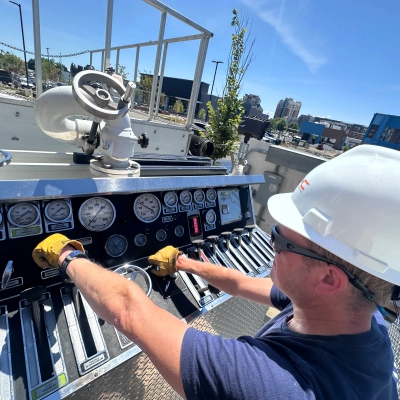
I always handle the compliance checks and final client reports myself. That’s my name on the line. My crew handles the hands-on work, like water-flow testing and hydrant flushing, using procedures I wrote. We were wasting time for months with overlapping tasks, but a daily checklist and a quick end-of-day review helped us catch mistakes early and get jobs done on schedule. I delegate the routine stuff, but I keep the final say on anything that affects our reputation.
Discuss Safety Each Morning
Running a medspa means I keep the big clinical items, like new treatments and safety protocols, on my desk. My team handles the appointments and marketing. Every morning, we have a quick five-minute chat about any safety issues before we even look at the day’s numbers. That simple check-in is how we catch problems early and make sure everything’s up to standard. It does more for our quality than any complicated system ever could.

Approve Listings Prelaunch
I keep the pricing and complex negotiations for myself since that’s where my experience counts. My team handles everything else, like photography, staging, and first contacts, using checklists I created. I have just one rule: I do a final check before any listing goes live. It took a bit to get right, but now our listings look better and go up faster, freeing me to focus on the bigger stuff.

Define Failure Modes for Handoffs
Working with roughly 40 clients, the rule we landed on is that reversibility decides the handoff, not seniority. Anything whose output can be undone in an afternoon goes out on the first pass, and anything touching a client commitment stays with me until there is a written checkpoint someone else can run without me. The checkpoint is the real handoff rather than the task: we found that writing down the three failure modes worth looking for, and asking the reviewer to check only those, cut review time far more than any process document did. When we moved delivery to that pattern the reviewer stopped re-deciding the whole job, which is the actual cost. The trap I still watch for is handing over the work while quietly keeping the judgment.

Triage Creative Tasks Each Monday
I keep anything that touches the core creative problem on my plate and push everything else out. Fulfillment logistics, vendor follow-ups, scheduling, sample shipments, and routine production coordination all move to someone else the moment I’m near capacity.
My checkpoint is a five-minute scan every Monday morning. I look at my week’s task list and sort each item by whether it requires a decision only I can make or execution that someone trained can handle. If it’s execution, it goes on the delegation list that same day with a clear deliverable and a deadline attached.
That keeps me focused on the two or three things where my involvement changes the outcome. When I’ve tried to hold onto everything, the creative work suffered because I was buried in coordination. Letting go of the operational tasks freed up the person handling them, too, since they could move through a clean list without juggling unrelated decisions.

Route Feedback Via Supervisors
Running two multi-million dollar home service companies in Spokane since 2010 taught me to keep high-level logistics and customer communication on leadership’s plate while delegating hands-on field tasks. When schedules get tight, our office handles client priorities and access notes directly so our field technicians can focus entirely on execution.
The delegation checkpoint that protects our delivery speed is establishing clear priority checklists and a management communication buffer before work begins. Funneling feedback and specific requests through dedicated supervisors keeps technicians moving without on-site friction or awkward miscommunications.
We also maintain trained backup crews ready to step in instantly if unexpected disruptions happen. Investing in well-supported, stable teams ensures that delegating execution never compromises the consistency or quality our clients expect.

Lock Logic Before Fabrication
Running custom-engineered automation projects — where a missed milestone can stall an entire plant’s production — taught me quickly that the delegation decision isn’t about trust, it’s about consequence sequencing. I keep the client-facing scope definition and approval package sign-off on my plate, because those set the architecture every downstream task depends on.
What actually changed everything for me was building a formal “Approval Package” checkpoint into every project before any components get ordered or fabrication begins. Once the client confirms that document — detailed equipment lists, 3D layouts, sequence of operation — my senior engineers can execute independently without guessing. That single gate eliminates the costly re-do loop that kills delivery timelines.
The delegation move I’d recommend: hand off execution only after the logic is locked in writing, not verbally. When a project manager with 20-plus years of experience owns a documented sequence, they don’t need me hovering — and the client gets the same quality regardless of how loaded my calendar is.

Confirm Triggers Via Verbal Teach-Back
My background is built on handling extreme cases under real pressure – dogs on death row with no margin for error. When your workload hits its ceiling, the instinct to hold everything yourself is exactly what breaks the system.
The clearest delegation line I’ve drawn is this: I keep the initial read on the dog and the family relationship. That piece requires my eyes and my judgment. But once I know what we’re working with, my wife Nicole and our team can run the structured repetition and reinforcement sessions without me present for every moment.
The one checkpoint that actually protects quality is a verbal handoff where the person taking over has to tell me back what the dog’s specific triggers and thresholds are before I step away. Not a checklist – a conversation. If they can’t explain it in their own words, the handoff isn’t ready.
Where I’ve seen delegation fail is when people hand off the work but not the context. The task gets done, the nuance gets lost, and you end up doing cleanup that costs more time than if you’d just stayed involved. Hand off the what and the why together, or don’t hand it off at all.

Verify Security Prior to Transfer
As operations director at Middletown Self Storage I handle daily logistics across our two locations so I stay close to security elements like individual unit alarms and climate controls when workloads peak.
I delegate mover connections for packing loading and unloading since our process already routes clients to reliable local help that covers furniture assembly too.
For vehicle parking I keep final checks on space assignments for boats and RVs but hand off the scheduling once ground-level access is confirmed.
This checkpoint of verifying unit alarms and access hours before transfer keeps every handoff on time and secure.

Audit Diagnostics Ahead of Booking
With over three decades founding and leading Environmental Designers Irrigation across New Jersey, Pennsylvania, and New York, plus my role as Chairman of the Landscape Irrigation Contractors Board, I’ve repeatedly scaled operations during peak seasons without missing deadlines.
I keep client-specific irrigation audits and upgrade recommendations on my plate because they draw directly on my Certified Irrigation Auditor and RainBird IQ credentials to match systems to local conditions like those in Monmouth County estates.
Routine start-ups and mid-season checks get delegated to the team, but I retain final sign-off on any repair estimates or controller reprogramming to prevent the small issues that turn into major failures later.
One checkpoint that works every time is requiring my review of the diagnostic notes from each service before the next booking is confirmed, which keeps quality locked in even when the schedule is tight.

Build Go/No-Go Gates During Downtime
Eighteen years of building systems for high-stakes, deadline-driven environments taught me one thing: the real delegation question isn’t *what* to hand off — it’s *when to make that call before you’re already drowning*.
The move that works for me is separating “judgment work” from “execution work” early, at the intake stage — not mid-project. When I’m onboarding a CPA firm onto our growth system, I keep the scope decisions and the client-facing workflow design in my lane. The CRM configuration, assistant training, and QA testing? That runs on a structured process my team owns completely.
The specific checkpoint I swear by: we call it the “go/no-go gate” before anything touches the client. Every AI assistant we configure at PGT gets tested against real prospect scenarios before launch — my team runs it, documents the gaps, and only escalates to me if something fails the defined threshold. That gate replaced me being cc’d on every small decision.
The real unlock was designing that gate during a *slow* week, not a busy one. Once that standard exists in writing, delegation stops being a trust exercise and becomes a process handoff.

Apply Four Lenses to Risks
Running Rule Ltd and advising General Counsel under tight regulatory deadlines, I separate baseline data gathering from high-exposure risk calls when capacity peaks. I delegate initial checklist reviews, entity mapping, and evidence gathering, while keeping the final judgment on beneficial ownership opacity and cross-border sanctions exposure.
My single best delegation move is requiring a four-lens checkpoint on all flagged issues–evaluating source credibility, pattern across time, recency, and counterparty response quality before anything escalates to my desk.
This prevents analysts from getting stuck in raw media noise and ensures I receive a decision-ready evidence pack rather than raw data. It preserves our delivery speed while guaranteeing every final decision is rigorous enough to withstand regulatory scrutiny.

Stage Digital Phase Checks
In running Turn Key Remodel’s design-build projects, I stay directly involved in initial client needs and budget talks while handing off execution details once plans are set. This keeps firm deadlines moving without me becoming the bottleneck on every task.
Project managers take the weekly milestone tracking and digital design reviews so I focus on overall coordination. Our in-house architect Sam handles drawing refinements and renderings in parallel, which lets sourcing and permits start earlier.
The key checkpoint is requiring those digital reviews and clear updates at each phase before the next crew step begins. It keeps quality consistent on kitchen and bath remodels or room additions while letting the team deliver without constant oversight.
Require Homeowner Walkthroughs at Closeout
Having spent over two decades in leadership at Owens Corning and now running FoamWorks Concrete Leveling, I keep overarching company strategy on my plate while delegating daily execution to trusted operational leaders.
I hand off scheduling, customer care, and job closeouts to our Director of Operations, Heather Miller, while trusting experienced crew leaders like Jermaine Shelton to manage on-site PolyLevel installations.
The single checkpoint that preserves our quality and speed is requiring an on-site final walkthrough between the crew leader and the homeowner before any project is marked closed in our system. This ensures our high installation standards are verified immediately at the job site without creating a bottleneck on my desk.

Flag Voice Risks After First Draft
Running multiple businesses from dog walking in Chicago to a full LA training facility and now So Fetch Consulting has taught me the real limit is my own capacity for high-stakes decisions, not hours worked. I keep client strategy alignment and final campaign direction on my plate because those tie directly to results like the measurable leads we drive for trainers and campaigns.
Execution tasks such as content scheduling, graphic assets, or initial keyword pulls go to the team right away. Joel handles the tech and design side while I focus on the S3 System playbook creation for each client.
The checkpoint that keeps quality tight is a quick milestone review after the first draft of any playbook or ad set, where the team flags only the pieces that touch brand voice or conversion paths. Everything else moves forward without looping back until the data comes in from analytics.

Gate Transfers With Complete CRM Data
Having spent over 17 years managing operations and workflow design at ABS | Xerox, I divide tasks between strategic client architecture and operational execution. I keep high-level needs assessments on my plate and delegate downstream tasks like intake routing, warehouse prep, and field deployment.
For example, when rolling out office equipment like Xerox AltaLink or VersaLink devices, we manage the process through distinct lifecycle zones. Once client requirements are established, our operations and dispatch teams take over fulfillment and staging without needing executive micromanagement.
My most effective delegation move is establishing a strict “handoff gate” where a project cannot transfer between teams until core data–like asset verification and agreement validation–is logged in Zoho CRM. This structural checkpoint ensures technicians and coordinators receive complete information immediately, keeping deliveries on schedule without quality loss.

Retain Accountability With Final Walkthrough
Having run HomeBuild for over 20 years across Chicagoland, I’ve learned that you can delegate tasks, but you cannot delegate accountability. When workload peaks, I keep the initial property inspections, itemized scopes, and insurance adjuster meetings on my plate, while delegating the physical installation to our certified crews.
Our specialized teams execute the hands-on tear-offs and install full systems like Owens Corning TruDefinition Duration AR shingles according to strict manufacturer standards.
My non-negotiable delegation checkpoint is an owner-supervised final walkthrough and magnetic nail sweep before signing off on warranty paperwork. Requiring that personal sign-off lets our crews move fast during high-demand periods without sacrificing a single detail of craftsmanship.